
Heat transfer | Heat recovery | Energy efficiency
Self-Cleaning Pillow Plate Heat Exchangers
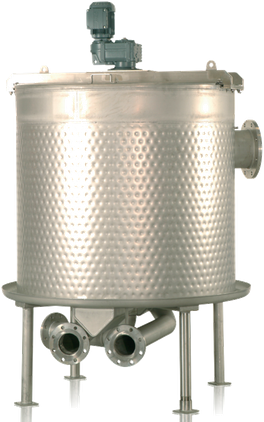
Self-cleaning pillow plate heat exchangers for contaminated or fibre-containing process liquids, using rotating brushes to keep heat transfer surfaces accessible during operation.
Your process. Your requirements.
Built around the application.
This self-cleaning configuration combines concentric pillow plate heat transfer surfaces with a rotating brush arrangement. It can be considered for heating, cooling and heat recovery from contaminated liquids, including wastewater, sludge and fibre-containing process streams.
Features & options
- Rotating brushes clean the heat transfer surfaces.
- Concentric annular plates with configuration adapted to the duty.
- Brush movement creates turbulence to support heat transfer.
- Application-specific material and heat transfer medium selection.
Technical overview
Design data & materials
| Parameter | Design / scope |
|---|---|
| Cleaning principle | Rotating brush system |
| Brush speed | Approximately 20–30 rpm |
| Heat transfer surfaces | Concentric pillow plates |
| Configuration | Plate quantity and unit volume adapted to the duty |
| Materials and utilities | Selected for the process liquid and heating or cooling medium |
Why Anytherm
Process understanding.
Practical engineering.
Personal support.
We work through the requirements with your team and develop a scope that fits the process, installation and operating needs.
Focus on the actual contamination
We assess the media and deposit behaviour when considering self-cleaning heat transfer.
A practical system approach
Thermal duty, pressure loss, materials and maintenance access are considered together.
Independent project support
Anytherm selects suitable technology and manufacturing arrangements for the application.
Heat transfer with contaminated liquids
Fibres and deposits can reduce heat transfer performance in conventional arrangements. The brush system continuously acts on the surfaces, while the exchanger geometry and materials are selected for the actual liquid and operating conditions.
Assess fouling and maintainability together
Self-cleaning does not eliminate the need to assess the process or maintain moving components. Solids, viscosity, deposit behaviour, brush suitability and service access should be discussed at the selection stage.
A closer look
Project examples & equipment details
Select an image to enlarge it. Configurations shown are examples; the final scope is tailored to the project.

Before your enquiry
Practical questions
How are the surfaces cleaned?
A rotating brush system acts on the pillow plate surfaces. The published brush speed is approximately 20–30 rpm, with the final arrangement selected for the duty.
Is self-cleaning suitable for every contaminated liquid?
No. Suitability depends on solids, fibres, viscosity, deposits, materials and operating conditions. The liquid properties need to be assessed before selection.
What should I include in my enquiry?
Share liquid composition, solids and fibre content, viscosity, flow rates, temperatures, pressure, fouling behaviour and cleaning constraints.
Share what you already know. You do not need a complete specification to start the discussion.
Related equipment & expertise
Let’s talk about your process
Discuss your project
with our engineering team.
Share your requirements or a question. We will help you find the right starting point.
Start with your process, operating conditions and what you want to improve. A complete specification is not needed — our sales and engineering team will help clarify the next step.
Contact our team
[email protected]
+41 78 722 2200
We will connect you with the right specialist for your application.
Send us your request
Tell us about your process requirements, technical specifications or potential energy savings.
Prefer a little guidance? Start a guided enquiry ↗