
Mining & Metals
Process air heating for mining & metallurgy.
Custom process air heaters using steam, hot water or electricity, combined with filtration and heat transfer equipment for metal processing and the production of mining chemicals.

Custom air treatment Filtration, preheating & main heating
Steam, water or electric Heating matched to your process
Lifecycle support Replacement units & spare parts
Built around your process
The right air conditions.
At the right point.
Airflow, inlet and outlet temperatures, available energy sources and installation space define the heating concept. Steam conditions, hot-water temperatures or the available electrical supply are considered accordingly. Maintenance access and integration with the surrounding plant are just as important.
Anytherm develops application-specific heat transfer equipment for these requirements, from replacement air heaters to coordinated filtration, preheating and main heating packages.
01 · Air intake & filtration
Start with the incoming air.
Weather protection, filter stages and service access are configured for the installation. The required filtration level and pressure loss form part of the project-specific design.
02 · Preheating & heat recovery
Use suitable heat sources first.
A preheating stage can use suitable hot water, recovered heat, flash steam or condensate where the process temperatures allow. A wider heat recovery assessment can help identify integration opportunities.
03 · Main air heating
Reach the required process temperature.
Steam, hot-water or electric air heating is selected around the required temperature, heating duty and available utilities. Air-side pressure loss, controls, casing, connections and maintenance access are considered together.
04 · Process integration
Make the interfaces clear.
Coordinate air connections, installation space, instrumentation and maintenance access with the surrounding plant. The final scope and documentation requirements are agreed for each project.
Relevant project experience
Different processes.
Related engineering questions.
Our project work spans copper metallurgy and mining chemicals, including new equipment packages, replacement air heaters and subsequent spare parts support.
Copper smelting · Central Asia
An integrated air heating package
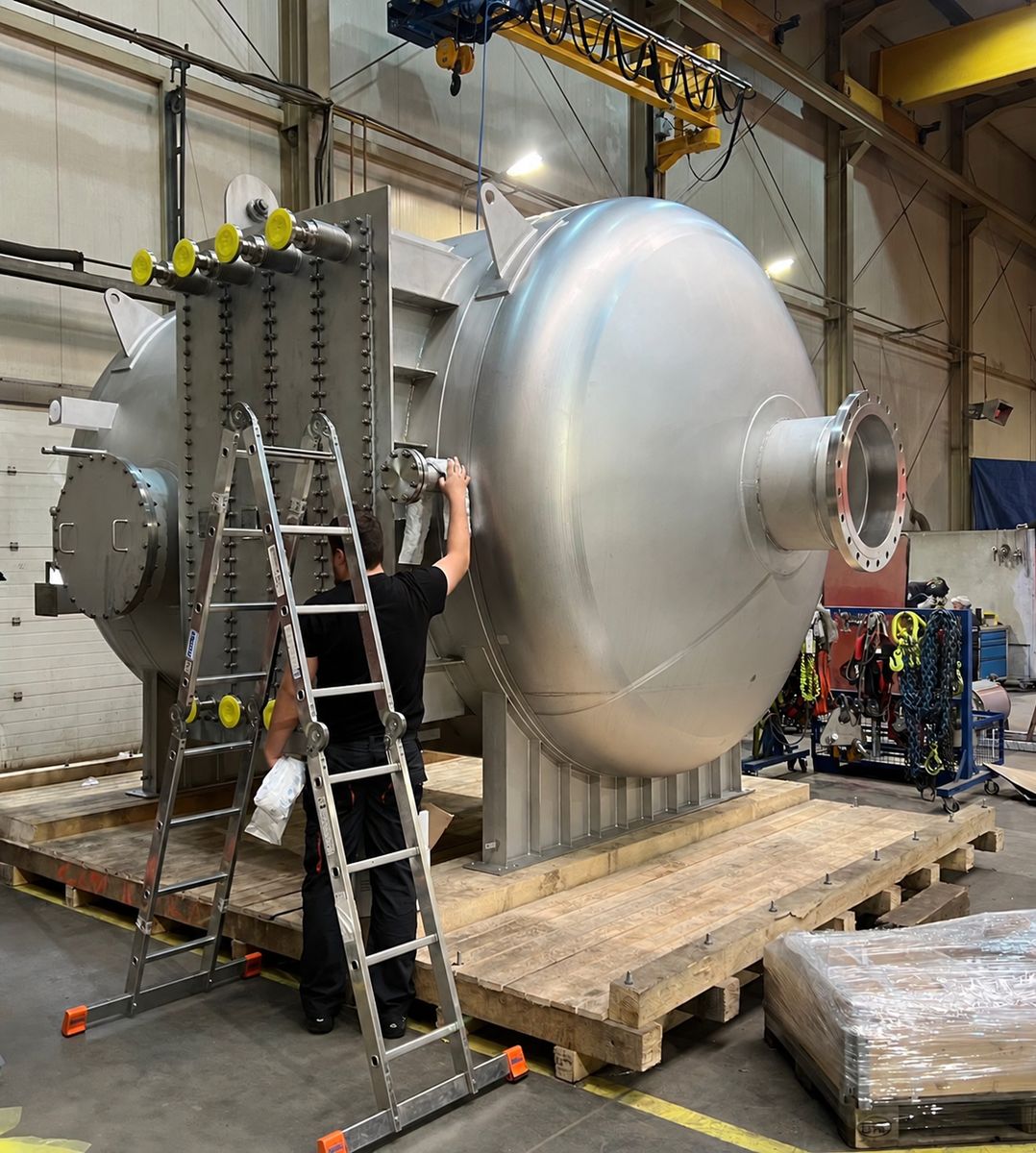
Weather protection and filtration combined with steam preheating and a separate main air heater for a copper smelter project. The main heater shown here uses condensate and flash steam before the main steam heating stages.
| Specified air mass flow | 142,000 kg/h |
| Heating stages | Condensate + flash steam + two main steam stages |
| Max. allowable pressure | 26 barg: main steam stages · 4 barg: recovery stages |
| Design features | Removable heat exchanger elements and telescopic support legs |
Mining chemicals · Australia
Replacement & ongoing support
A steam air preheater replacement for a mining chemicals production facility, with filtration and removable heat exchanger elements. The project also led to subsequent spare parts support.
| Specified operating cases | 30,000–80,000 kg/h air mass flow |
| Air outlet temperature | 200°C at the specified operating cases |
| Max. allowable pressure | 24 barg: steam side · 1.5 barg: air casing |
| Design features | Four removable steam coils and nine box filters |
Copper processing · Europe
Making use of available heat
A staged air heater design combining flash steam and condensate preheating with three saturated steam sections. The heat exchanger elements can be withdrawn sideways for maintenance.
| Specified air mass flow | Approx. 97,000 kg/h |
| Heating stages | Flash steam / condensate preheating + three steam sections |
| Max. allowable pressure | 6.5 barg: steam sections · 4 barg: preheating section |
| Design features | Side-removable exchanger elements; installation on a customer-provided support structure |
Selected project design data. Maximum allowable pressures refer to component design limits; operating pressures depend on the specified operating case. Renderings illustrate the individual project configuration.
Why Anytherm
Designed for the duty.
Considered beyond delivery.
We connect the thermal design with the practical requirements of installation, maintenance and long-term operation.
A configuration that fits
Heating stages, filter sections, casing and connections are specified around the process and available utilities.
Service access built in
Removable heat exchanger elements and accessible filter sections support planned maintenance and replacement.
Clear project coordination
Interfaces, documentation and applicable pressure equipment requirements are defined for the individual project.
Heat transfer meets energy consulting
Consider the heat source.
Then the heater.
Before specifying additional heating capacity, it can be useful to examine the available energy flows around the process.
Electric air heating
Consider electrical heating where it suits the process temperature and duty. Available electrical capacity, control requirements and the site's energy strategy guide the design.
Hot-water air heating
Use available hot water or a suitable heat recovery circuit where the temperature level meets the air heating or preheating requirement.
Steam, flash steam & condensate
Assess which available heat sources can support the required air heating stages.
Heat recovery & pinch analysis
Where appropriate, extend the assessment to the wider process and identify potential heat recovery opportunities.
Let’s talk about your process
Discuss your project
with our engineering team.
An initial discussion is enough to get started. If you already have airflow, temperature and available energy-source data, we can take the next step from there.
Contact our team
Your air handling & air heating specialist
Gabriel Kägi · Head of Sales Engineering
Start with the information you have
These questions are optional. Your answers will be added to the message below; you can review and edit it before sending.
Send us your request
Useful first questions
Before we start.
Can the air heater use electricity or hot water instead of steam?
Yes. Electric air heaters and hot-water air heaters can be considered alongside steam heating. The choice depends on the required air temperature, heating duty, available utilities and operating conditions. We can also assess suitable combinations with heat recovery.
Can you help with an existing air heater?
Yes. Share the existing duty, available drawings and the reason for replacement or modification. We can then assess the equipment scope, connection points and service access requirements.
What information is useful for an initial assessment?
Airflow and its reference conditions, inlet and required outlet temperatures, available steam, hot water or electrical supply, allowable air-side pressure loss and installation constraints. It is fine to begin with only part of this information.
Can heat recovery be considered as part of the project?
Yes. We can examine the available heat sources and, where useful, carry out a wider heat recovery or pinch analysis. The opportunity depends on the actual process temperatures, operating hours and integration requirements.