
Heat transfer | Heat recovery | Energy efficiency
Steam Air Heaters for Industrial Process Air
Custom steam air heaters and steam coils for indirect process air heating, combining stainless steel construction, extractable elements and condensate heat recovery.

Your process. Your requirements.
Built around the application.
Anytherm steam air heaters use finned-tube heat exchangers to transfer heat from steam to air or other gaseous media. Each unit is designed for the specified airflow, outlet temperature, steam conditions and plant layout, including new installations and replacement heaters.
Features & options
- Fully welded, insulated stainless steel housing with sanitary design.
- Extractable heat exchanger elements for inspection, cleaning and replacement.
- Optional air preheating with recovered heat.
- Electrical or thermal oil heating stages where higher outlet temperatures are required.
Steam air heaters for indirect process air heating
A steam air heater transfers heat across the tube walls while keeping steam and process air separate. For spray drying, this provides indirect air heating without intentionally mixing combustion products into the drying air. The steam can come from gas, biomass or another source; the heater must be matched to the actual steam conditions.
Specify the heater together with the steam and condensate system
Outlet temperature is only one design input. Steam pressure at the heater, condensate return pressure and the full operating range determine whether heat transfer, control and drainage work together. At partial load, throttling the steam supply can reduce pressure inside the coil below the level needed to discharge condensate. This is known as stall; accumulated condensate can impair temperature control and contribute to waterhammer.
Anytherm assesses main steam heating, flash-steam recovery, condensate cooling and the protection arrangement together. Warmer inlet air after dehumidification or preheating can reduce the main duty while also limiting the heat that recovery stages can transfer into that air stream.
For an enquiry, include air mass flow and inlet conditions, required outlet temperatures at full and reduced load, steam and condensate-return conditions, allowable pressure drop, installation space and service access. Read the engineering guide to indirect air heating for spray drying or explore Anytherm systems for spray drying.
Technical overview
Design data & materials
| Parameter | Design / scope |
|---|---|
| Air mass flow | Up to 150,000 kg/h per unit |
| Air discharge temperature | 80 to over 200 °C, depending on steam conditions; above 300 °C with additional electrical or thermal oil heating |
| Steam pressure | Up to 70 bar, subject to the agreed design |
| Housing and tubes | AISI 304 or AISI 316 stainless steel |
| Fins and insulation | Aluminium or stainless steel fins; mineral wool insulation |
Why Anytherm
Process understanding.
Practical engineering.
Personal support.
We work through the requirements with your team and develop a scope that fits the process, installation and operating needs.
Steam and condensate expertise
We consider the heater, condensate cooling, control and operating scenarios together.
Maintainable industrial construction
Extractable elements and fully welded housings make service access part of the design.
Heat recovery before additional heating
We can combine preheating, steam heating and supplementary heating to match your process and utilities.
Recover heat from condensate
Flash steam and condensate from the steam coils can preheat the process air. Separate flash steam and condensate stages support stable operation at different loads and allow water to return to the tank without flash steam.
Consider the complete steam system
Pressure sensors, valves and bypass piping form part of our field-proven safety arrangement. Together with correct condensate removal and control, this helps reduce the risk of steam hammer when coils fill with water, particularly at low load.
Equipment in practice
Main air heater retrofit in New Zealand
In this dairy retrofit, Anytherm retained the insulated housing and replaced 24 heat exchangers across four parallel air streams: 16 steam, four flash-steam and four condensate exchangers, for a total design airflow of up to 250,000 kg/h. Changed inlet conditions following air-treatment modifications required the heating duty and recovery circuits to be reassessed. Flash steam that could not be used in the modified heater was considered for recovery in another process.
A closer look
Project examples & equipment details
Select an image to enlarge it. Configurations shown are examples; the final scope is tailored to the project.
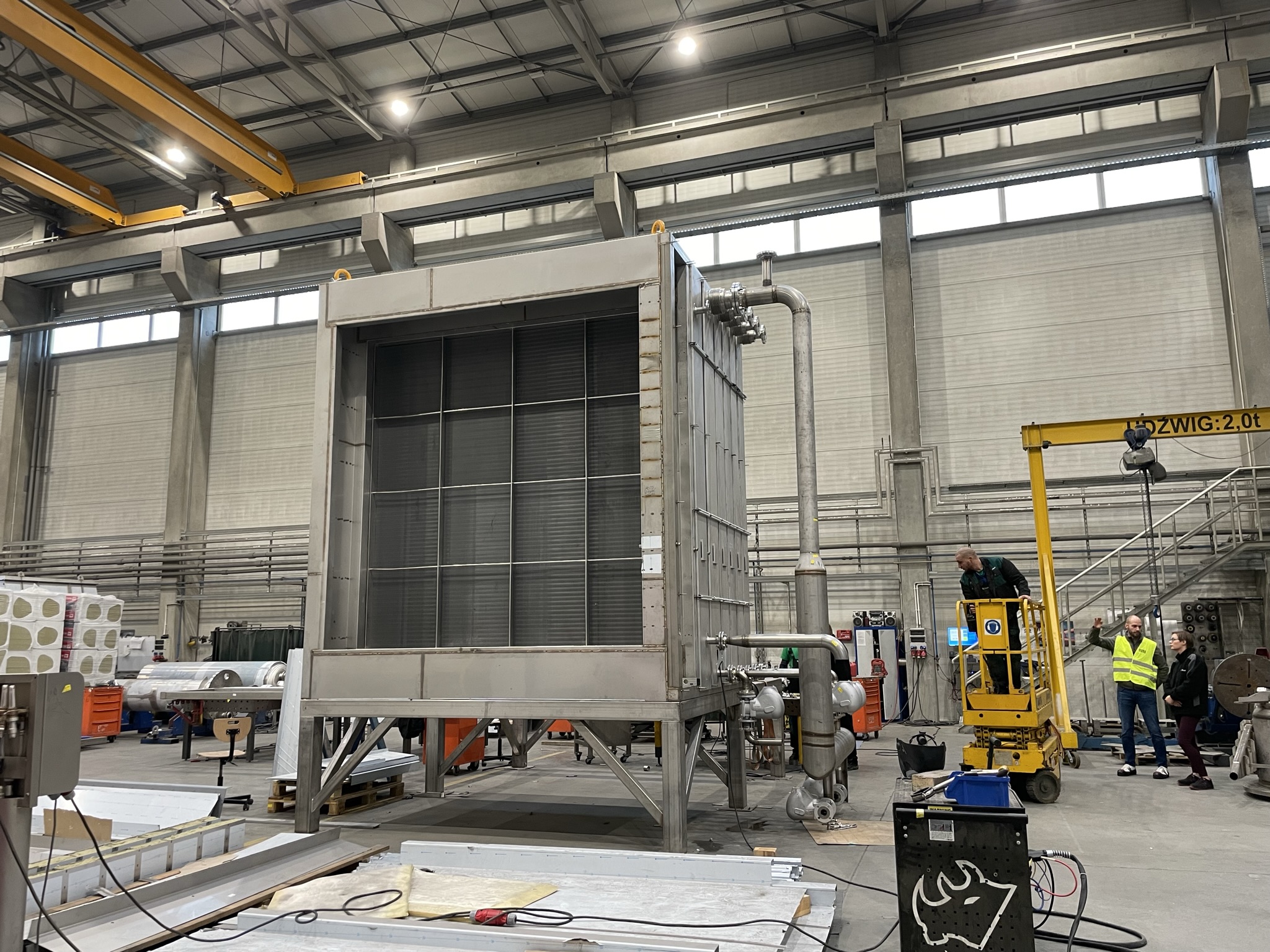
Explore the steam and electric air heating project in Scandinavia ↗
Before your enquiry
Practical questions
Can a steam air heater replace an existing unit?
Yes. Replacement projects are designed around the required thermal duty, available installation space, connections and maintenance access. Existing drawings and operating data help establish the scope.
Can pressure-related documentation be included?
The applicable pressure requirements and documentation are agreed for each project. Tell us the installation country, steam conditions and required design code at the enquiry stage.
What should I include in my enquiry?
If available, share the air mass flow, inlet and outlet temperatures, steam pressure and temperature, condensate conditions, operating load cases and installation dimensions.
Share what you already know. You do not need a complete specification to start the discussion.
Related equipment & expertise
Let’s talk about your process
Discuss your project
with our engineering team.
Share your requirements or a question. We will help you find the right starting point.
Start with your process, operating conditions and what you want to improve. A complete specification is not needed — our sales and engineering team will help clarify the next step.
Contact our team
[email protected]
+41 78 722 2200
Your air handling & air heating specialist
Gabriel Kägi · Head of Sales Engineering
[email protected]
Send us your request
Tell us about your process requirements, technical specifications or potential energy savings.
Prefer a little guidance? Start a guided enquiry ↗